Why Larchwood Cladding is the Perfect Choice for Sustainable Design
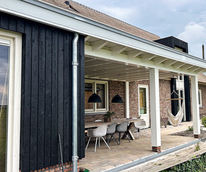
Larchwood cladding for homes and office buildings represents one of many sustainable choices available to the owners, architects, or builders intent on going green. Larchwood has become a favoured option because of the wood's natural durability, exquisite colour, and environmentally friendly aspects. Truly, larch wood is the embodiment of green building needs: The wood itself is weather-resistant and looks great.
What Is Larchwood Cladding?
The use of broad larch timber boards on exteriors of buildings is termed larchwood cladding. Known for strength and a golden-brown tint, larch is one of the hardest softwoods and thereby stands best against the effects of weather and wear-and-tear. Often it is left untreated, allowing time for it to weather into a glamorous silvery-grey patina.
Unlike chemically treated timber or synthetics that need to be used as claddings, larch offers an eco-friendly, renewable alternative that decreases the environmental footprint, yet furthers high calibrations in performance.
The Sustainability of Larchwood1. A Renewable Resource
Larch is a naturally renewable timber species that grows in profusion in Europe, North America, and parts of Asia. If larchwood is seized from forests that are being responsibly managed, there's always an ecological balance maintained by way of replanting or natural regeneration of one tree for every one that is being felled.
2. Minimal Processing Required
Unlike composite or synthetic materials, larchwood requires very little processing. It is naturally dense and resinous and is therefore durable without heavy chemical treatment. The production therefore has less carbon footprints and is environmentally much safer.
3. Low Carbon Footprint
Wood is really one of the very few building materials that store carbon. Each cubic meter of larchwood stores with carbon dioxide that the tree would have absorbed during its lifetime, from the atmosphere, and therefore, is a carbon-negative material if acquired responsibly.
4. Biodegradable and Recyclable
While larchwood cladding can be recycled or allowed to biodegrade naturally, plastics and composites tend to stay in the environment for decades.
Natural Durability and Longevity
One of the best features of larchwood is that it lasts a long time. The wood contains high resin levels that confer upon it natural resistance to rot, insects, and ultimate decay. Thus the homeowner enjoys several decades of performance with very little maintenance.
In fact, untreated larchwood cladding can last for more than 50 years, depending on the climate. It also weathers to a gentle silver-grey color, which lends to its charm as a long-term finish that will not demand attention for maintenance.
Energy Efficiency Advantages
Use of natural timber like larchwood can also contribute to making buildings energy efficient. Wood itself has insulating properties that help maintain indoor temperatures, lessening the need to rely on artificial sources of heating and cooling, which in turn decrease the building's energy consumption and make it more sustainable for the future.
Aesthetics and Versatility
One talks about natural Timber cladding:
larchwood cladding apart from sustainability is an aesthetic choice. Amber disperses golden glows over various structures while for two different architecture-the classical and the modern. The soft silver-grey weathering of this wood gives it an ambiance with which to intermix into the natural landscape.
The all-weather versatility and adaptability, therefore, allow designers to use it anywhere between understated sleek modern facades and austere cabins. It looks good in any orientation: vertical, horizontal, or offset in some arty fashion to blend seamlessly with nature-inspired styles.
Minimal Maintenance
Very often, sustainable design promotes low maintenance. Larchwood stands as an illustration of this principle. Most homeowners choose to let their larch cladding weather naturally without using chemical treatments. In this way, they can keep upkeep at a bare minimum and avoid buying any harmful products.
To maintain the golden hues, occasional oiling or staining can be applied-all depending on preference. Anyhow, in comparison to some other exterior materials, it is a very low maintenance product.
Cost-Effectiveness Over Time
On the onset, larch cladding could seem an expensive way of cladding when compared to options such as vinyl or treated pine. But this cladding will turn out cheaper in the long run because of its longevity, less upkeep, and energy-saving potential. Sustainable choices generally require a higher upfront cost but eventually pay in added durability, reduced maintenance, and environmental ambience.
Larchwood and Green Certifications
For contractors and homeowners who are looking at green certifications from the likes of LEED (Leadership in Energy and Environmental Design), the use of sustainable timber like larch can be worthy of several points. Being renewable and having a low carbon footprint, it is among the best selections for projects that seek to comply with eco-friendly standards.
Why Larchwood Stands Out
In short, this is why larchwood cladding stands as the option for sustainable design:
✅ Renewable and responsibly sourced
✅ Requires the least chemical treatment
✅ Stores carbon to offer more credits against the environment
✅ Naturally durable and long-lived
✅ Energy-efficient and insulating
✅ Great looks that grow on you with time
✅ Low maintenance and cost-effective over time
Wrapping Up
As sustainable architecture continues to rise, it is more important than ever to select materials that fit the values of an eco-conscious world. Cladding with larchwood is the perfect synonym for sustainability, performance, and beauty. Being renewable in nature, having a low carbon footprint, and great durability make it a good option for homeowners and architects looking to build structures that are as eco-friendly as they are elegant.
That said, larchwood cladding is more than just a design choice. It is an investment toward a greener and better future.
